


Ana Ramos, Leslie Hiatt, and Bell Gardens Fourth Graders
A fourth-grade class demanded that their state representatives acknowledge and redress a government policy of mass discriminatory deportations against Mexican Americans in the 1930s.
In March 2015, Leslie Hiatt watched as 34 of her students from a mostly immigrant community walked into the California Capitol building to demand justice from their elected representatives. She was overwhelmed with pride. “I just felt like they belonged there,” she said later, fighting back tears.
That day was an emotional roller coaster for Leslie’s students. The state Capitol was full for the state legislature’s education committee meeting. More than a hundred people were in attendance to speak or hear testimony about other legislation. Leslie’s students stood out; they were the only speakers who weren’t even in middle school yet.
Student Nicole Sandoval remembers approaching the microphone to speak and hearing an assembly member ask if she wanted a piece of gum. “He said my face looked so green that I looked like I was going to throw up,” she laughed. Nicole declined the offer. She may have looked nervous, she says, but her focus was not on the people in the room. She was thinking of her mission: to seek justice for the more than one million people who suffered as a result of the U.S. government’s discriminatory policies in the 1930s. “And I just remember feeling a determination that I was going to do a good job for them, not for me.”
That trip to testify before California’s Education Committee was the culmination of hard work and determination on the part of these passionate elementary students. Their drive for justice started the year before, initially ignited by student-teacher Ana Ramos.
“Ana was in my classroom for eight weeks,” teacher Leslie Hiatt reflects, with admiration in her voice. “She changed every single student’s life, and my life, in eight weeks.”
In 2014, Ana joined Leslie’s fourth-grade class at Bell Gardens Elementary School, in Los Angeles County. One of Ana’s last big projects after a successful tenure included teaching a social studies unit. In reviewing the curriculum, Ana saw several historical examples of discriminatory policies that targeted immigrants—the Chinese Exclusion Act of 1882 and the World War II imprisonment of Japanese Americans—but one story was conspicuously absent: the forced removal of Mexican Americans from the U.S. in the 1930s.
In response to shrinking employment opportunities during the Depression, the Hoover administration oversaw the so-called Mexican Repatriation, a nationwide effort to remove people of Mexican ancestry from the U.S. Hundreds of thousands of Mexicans and Mexican Americans were summarily rounded up in raids, often in public places, and deported if they failed to produce legal paperwork. The raids frightened many legal residents into leaving. Others were pressured to leave when local governments coordinated with private businesses to withhold assistance from and refuse to hire Mexican Americans.
In the end, more than one million people of Mexican ancestry were “repatriated.” Some had never before set foot in Mexico. The Hoover administration claimed the repatriations were carried out to vacate jobs in favor of Americans; in reality, however, the policy forced some six hundred thousand U.S. citizens out of the country.
Southern California’s large Mexican immigrant population were specifically targeted. On one day in 1931, more than four hundred people were racially profiled and detained in Los Angeles’s La Placita park—less than twenty miles from Bell Gardens Elementary School.
Leslie and Ana’s fourth-grade students were appalled when they learned about the unconstitutional deportations of the 1930s. “We all took this injustice very personally,” says student Diana Leal. “It happened to people who were just like us, with a Mexican heritage and a Mexican last name.” The population of Bell Gardens is ninety-five percent Latinx, and almost every student in the class was first-generation Mexican American.
The students tried to find out more about Mexican Repatriation, but like Ana, they could not find further information in their textbooks. Searches on the internet didn’t yield much more. When asked to choose a topic for their Language Arts assignment, the children unanimously decided to focus on the lack of representation and redress around this racist policy that affected over a million people. And they set their sights high.
“They were just like: ‘We're going to write to the president,’” Ana said, “‘because this has got to change.’”
Joshua Govea, another former Bell Gardens student, remembers how set he and his classmates were on seeking justice. “We had to do something for our ancestors,” he says.
So the eight- and nine-year-olds drafted a letter to President Obama, telling him what they had learned about the 1930s, how many people had suffered, and why the federal government should apologize to the Mexican American community.
The students were thrilled when, a few months later, they received a response from the White House. But as Leslie read the letter aloud for the class, silence fell across the room. The letter was nothing like what they had hoped for; they’d received a generic message encouraging the kids to keep fighting for justice, with pictures of the Obama family’s dogs.
“He didn’t even mention the deportations or an apology!” one of the students exclaimed.
“I don’t think he even read it,” another student said.
“The kids were just so upset,” Leslie remembers. They felt completely dismissed by the White House’s response. But their drive for justice didn’t dampen; they knew the importance of the story and the righteousness of their pursuit.
The students went back to the drawing board, searching for other ways to correct the historical record. With Leslie’s help, they found creative ways to share what they had learned about Repatriation with guests they invited to their classroom—a school board member, university professors, and even the state assembly member for their district.
Their passion impressed the state assembly member so much that she encouraged the students to enter her office’s contest, “There Ought to Be a Law.” The students could submit a proposal to change California’s history curriculum to fix the problem of underrepresentation they had identified and make sure that every student would learn what happened to Mexican Americans in the 1930s.
Though this wasn’t the students’ original goal, they understood the importance of sharing the story with millions more people. Including the history of Mexican Repatriation in textbooks and curricula in California would ensure that the experiences of their ancestors’ would not go untold.
“The next day we all sat as a class around the screen, and Ms. Hiatt was typing on her computer,” student Nicole Sandoval remembers. “We were all sharing ideas very excitedly, trying to fit our ideas in a little box with a word limit.”
Leslie Hiatt and her then fifth-grade students submitted their entry, and won. A new bill, A.B. 146, was introduced on their behalf. As the winners of the contest, the students were invited to testify about the bill before the State Assembly Committee at the state Capitol in Sacramento, four hundred miles away.
The Bell Gardens community rallied around the class to send them to the Capitol: parents joined as chaperones and sent homemade snacks for the bus trip, the school district helped pay for hotel rooms, local businesses made donations, and the teachers at the elementary school bought brand-new uniforms for the whole class.
After compelling speeches from several students at the California state Capitol, Leslie’s students succeeded when on October 1, 2015 their bill finally became a law, officially incorporating Mexican Repatriation into the California State Board of Education’s recommended social studies material. “It was pretty amazing,” Diana says, “that our hard work actually paid off, and that we got justice for the people who suffered because of these unconstitutional deportations.”
In 2020, five years after the bill became a law, Leslie’s former students reflected on how taking a stand changed them. “It's an incredible experience for anybody to have,” Joshua says, “the idea that you did something that meant so much to so many people and actually made a change.”
Diana hopes her class’s work will inspire others to stand up for what they believe in. “No matter how old you are or where you come from,” she says, “you still have a voice and can still make a change.”


Pamela Raintree
When a city council member in Shreveport, Louisiana, used the Bible to argue against an ordinance protecting LGBTQ+ people, Pamela Raintree challenged him to cast the first stone.
Pamela Raintree is no stranger to fighting. A transgender woman from Pascagoula, Mississippi, she has been fighting her whole life—for fair treatment, for representation, and for unity.
“Pascagoula . . . it's a conservative little town, very evangelical town. Growing up as a trans woman before anyone even knew what that meant in that part of the world, it was a very difficult process. I got beat up in school almost every day for the first three years. My parents were really hard on me because I was never one of those people that could be in a closet. As hard as I tried, the girl just stuck out all over the place, so it was difficult.”
Pamela—an Army veteran, a sign painter, and an activist in her sixties—has been a lifelong advocate for equality. She began working in the LGBTQ+ community in the 1980s, counseling transgender people in crisis; she also supported the parents of transgender children. “I developed a reputation for being the person to go to for that, and did just numerous classroom talks. I would go to counselor conferences and address people on gender issues.” Pamela moved up to Shreveport in the late 1990s. “I was the transsexual in Shreveport, so that's how we wound up getting involved when this ordinance thing came up.”
In 2009, as one of his first actions in office, Mayor Cedric B. Glover signed an Executive Order that expanded the city government’s non-discrimination policy to include sexual orientation and gender identity. Though a step in the right direction, the Executive Order was an impermanent measure; if the Mayor left office the non-discrimination policy would leave with him. At about the same time, Councilmember Ron Webb opposed the use of city funds to support the inaugural presentation of a local Gay & Lesbian Film Festival. Encouraged by the progressive nature of the Mayor’s Executive Order and alarmed by the council member’s opposition to LGBTQ+ rights, the Shreveport City Council and local LGBTQ+ activists decided to work toward a more permanent anti-discrimination law. Pamela joined the fight for the rights of the LGBTQ+ community.
More than four years of fearless, concerted advocacy finally resulted in full protection for LGBTQ+ citizens under the laws of Shreveport. The city became only the second in the state to pass such an ordinance.
That work came to fruition on December 10, 2013 when Ordinance No. 149, known as the “Freedom Ordinance,” was passed by the Shreveport City Council. Of the seven council members, six voted in favor of the law—nearly unanimous approval for equal protection. But there was one dissenting vote: Ron Webb, the same council member whose opposition to LGBTQ+ rights galvanized activists like Pamela years earlier.
Despite the widespread support that the Ordinance enjoyed from every other council member and the community writ large, the council member refused to end his crusade against the LGBTQ+ community. During the following session, he introduced a motion to repeal the Freedom Ordinance that Pamela and her peers had just fought so hard for.
In an earlier meeting, Councilmember Webb had made his views perfectly clear, saying that he doesn’t socialize with LGBTQ+ individuals because “the Bible tells us that we shouldn’t.” In the same meeting, he cited the Bible as the basis for this rationale, noting that the Christian text portrays homosexuality as an “abomination” and that those who identify as LGBTQ+ “will not inherit the kingdom of Heaven.” He believed that the council would never be able to determine if an LGBTQ+ person was fired or denied service as a result of their sexual orientation. But what infuriated Pamela the most was when he contended that God—not the council—should be the one to judge. Further, he implied that people who choose the path of discrimination do so on God's behalf.
Guided by a deep belief that the separation of church and state is the bedrock of America, Pamela knew that, yet again, it was time to fight. The council member’s failure as a public official to keep church and state separate—and his selective use of Bible passages to veil his own personal prejudices—was a form of hate that Pamela could not abide. She refused to see Shreveport’s Freedom Ordinance repealed, which would eliminate legal protection for LGBTQ+ people and unravel years of advocacy efforts.
Fortunately, Pamela had the community behind her. Dozens of Shreveport citizens came out to voice their support for the non-discrimination ordinance at the January 14, 2014 city council meeting where the motion to repeal would be discussed. One speaker, Sherry Lester Kircus, who grew up in Shreveport, also called on the Bible—but to challenge the anti-LGBTQ+ bias driving repeal efforts. Growing up at her church in Shreveport, Kircus said, she was taught that the Bible’s most important lessons were “to judge not and to love your neighbor,” no matter who they were. “As for obeying the Bible….We don’t worry about mixed fibers in our clothing, and here in Louisiana, we love our shrimp and our pork chops. Surely we can manage to love our LGBT neighbors also.”
But the decisive moment came when Pamela gave a speech that ultimately ensured the ordinance would stand.
“I was furious. I'd heard all the arguments back and forth so many times, not just at that city council, but all over the country . . . ‘It’s immoral.’ ‘It's against God's law.’ [But] this is a secular society.”
Pamela stood up and told the council that she was proud that they had approved the ordinance weeks before: “It made me feel that Shreveport was joining the America I served in the U.S. Army to defend. You know, the land of life, liberty and justice for all.”
Without the ordinance, she explained, she might face denial of housing or unfair firing, as she had before, with no recourse for legal action.
“People just don’t like people like me. I think I scare them, make them question how well they fit conventional concepts about what it means to be a man or a woman. Whatever the reason, it has been perfectly legal to discriminate against me because I’m transsexual. Well, the last time I was in these chambers, six of you recognized that there is something inherently wrong, something un-American about legally supporting the denial of fundamental necessities of life, and passed an ordinance prohibiting discrimination against gays, lesbians, bisexuals and transgenders.”
She took a deep breath and gripped the podium tightly as she zeroed in on Councilmember Webb’s biblical argument.
“I want to set the record straight about what the Bible says,” she told the council. “Leviticus 20:13 states ‘If a man also lie with mankind, as he lieth with a woman, they shall surely put him to death.’”
She picked up a stone she had brought with her and dropped it on the table with a thud. If the council member were to truly follow the letter of the biblical law he should've stoned Pamela to death in the chamber room.
“I brought the first stone, Mr. Webb, in case...your Bible talk isn’t just a smoke screen for personal prejudices.”
After she finished speaking, “You could have heard a pin drop” says Pamela. Then, despite being instructed not to clap, the gallery of observers burst into applause.
The council member knew he had been defeated. Pamela’s act of courage demonstrated that his use of Biblical text was indeed a veil for his own anti-LGBTQ+ bias. He asked the other council members to remove his motion from the agenda.
The powerful clang of that stone in the city council chambers was a culmination of Pamela’s lifetime of struggle and decades of community leadership. That day, she shattered the hate that sometimes shrouds itself in religion.
"I’m just a regular person—just trying to be a decent human.” But she goes on to say, “Our nation is founded on the idea of freedom—freedom OF religion and freedom FROM religion. . . . [Too often] discrimination is grounded in religious-based arguments.”
The story of Pamela’s speech quickly made its way to national news outlets, inspiring audiences across the country. Her courageous act challenged a hateful argument head on, ensuring that, in Shreveport, Freedom Ordinance No. 149 would remain the law of that land.

Aiko Herzig Yoshinaga
At seventeen, she was forced from her home, imprisoned, and told her confinement in an internment camp was a “military necessity.” Decades later, her dedicated research would expose the truth.
“This is where they’re gonna shoot us,” thought seventeen-year-old Aiko Yoshinaga as she stepped out into the desolate landscape of the Manzanar prison camp in the spring of 1942. If the government killed them all here, Aiko thought, “Nobody would know the difference.” Desert framed by mountains stretched for miles to the east and west, and the camp was surrounded by a barbed wire fence, studded with guard towers patrolled by military police.
Just a few months earlier, Aiko was a high school senior living in Los Angeles, the daughter of Japanese immigrants who struggled and sacrificed to provide for their six children. “As economically poor as we were, my parents managed to pay for my dance and piano lessons,” she recalled later, “at a time when my father was barely able to come up with the rent for our home.”
All that changed on December 7, 1941. “I had just been at a party, and we were going home in one kid’s car.” The radio announced that the Japanese military had attacked the U.S. Naval Base at Pearl Harbor in Hawai‘i. Within thirty-six hours, the United States had declared war on Japan, officially entering World War II. Two months later, President Roosevelt signed Executive Order 9066, authorizing the Western Defense Command, responsible for coordinating the defense of the Pacific Coast region of the U.S., to declare that every person of Japanese ancestry living on the West Coast would be subject to “evacuation and resettlement.”
More than 112,000 Japanese Americans were forced to leave their homes indefinitely and move to so-called relocation centers, hastily built camps where they would be imprisoned until the end of World War II. An estimated seventy thousand of those imprisoned were American citizens like Aiko.
When their evacuation orders came, Aiko and her boyfriend Jake (also the child of Japanese immigrants) realized they were going to be separated. Afraid of losing each other, they eloped, just days before they were forced from their homes and into California’s Manzanar Relocation Center.
Aiko’s marriage kept her close to Jake, but separated from her own family. Her parents and two of her siblings were sent to the Jerome and Rohwer camps, more than seventeen hundred miles away in rural Arkansas. Aiko had no idea if she would ever see them again.
In 1943, Aiko lay in the makeshift camp hospital in Manzanar after giving birth to her first child. She worried that she hadn’t done right by her family. She worried about caring for her baby in a cramped room with Jake and five of his family members, without running water to rinse out soiled diapers, without proper nutrition, without a place to cook, without privacy or freedom.
But she made do. “I think it's just that old Japanese thing,” she said later. “You shikata ga nai. You do the best you can under the circumstances.” She made do when she learned her father was deathly ill; she made do while she waited for permission to transfer to Jerome to see him; she made do on her five-day train journey to Arkansas, without a seat; and she made do when her father died ten days after her arrival, as Christmas Eve turned to Christmas morning 1943.
Aiko also made do when Jake was drafted to fight for the U.S. military while imprisoned at Manzanar.
Two years later, Aiko and her daughter were finally released, handed fifty dollars (around 350 dollars today) and sent out of the camp. Jake was still fighting overseas.
Although at least two government-commissioned studies found no evidence of espionage or threat from Japanese Americans, U.S. officials insisted that imprisonment was a “military necessity.” Some even claimed the internment was for Japanese Americans’ own protection. But forty years after she was released from Manzanar, Aiko would prove that the government was knowingly lying on both counts.
While working full-time and raising a family, Aiko joined an activist group called Asian Americans for Action (AAA). Run primarily by senior-citizen women, the AAA had a profound impact on Aiko’s idea of the world. She began to think differently about the relationship between the government and the people, realizing that she could speak out rather than making do.
In 1978, then in her fifties, Aiko moved to Washington, D.C., and took a break from her decades-long career as a clerical worker. Aiko decided to search the National Archives for internment camp records about herself and her family. She learned from the archivists that thousands of documents existed about the history and policy of internment, and very few people were looking at them. “So I started to examine those records,” Aiko said later, “and they grabbed me. Absolutely grabbed me.”
Aiko had never thought much about the broader story of Japanese American imprisonment—why it happened, who was responsible, and whether it was justified. But as she sifted through government documents, those questions became a full-time project.
Spending fifty or sixty hours a week in the archives, Aiko poured over neglected records, meticulously cataloging her findings. In her first three years of research, she amassed some eight thousand documents, unearthing the true story of Japanese American imprisonment.
Around the same time, the Japanese American Citizens League and Hawai‘i Senators Daniel Inouye and Spark Matsunaga were lobbying for an investigation into the history and impact of the wartime prison camps. They succeeded in 1980 when Congress created the Commission on Wartime Relocation and Internment of Civilians (CWRIC), which soon hired Aiko as a researcher.
Aiko’s growing catalog was an incredible starting point for the Commission’s work. “I documented everything I got, exactly where I found it: what file, what box, what record group, and everything else,” she said. Aiko wanted the evidence of government misconduct to be crystal clear and undeniable.
But there was one document that still eluded even Aiko’s exhaustive work. In 1942, the Western Defense Command had printed and bound ten copies of their Final Report on Japanese American Evacuation. The report clearly established that there was no military necessity for internment. Leaders of the War Relocation Authority (WRA)—the government agency that handled the internment of Japanese Americans—knew the report showed the government’s policy was discriminatory. Therefore, the WRA demanded all ten original copies be immediately destroyed and revised. But one copy was never accounted for.
One day, deep in her work at the archives, Aiko discovered a book sitting on the corner of an archivist’s desk. She noticed the book looked like the revised Final Report from 1943, but was surprised when she found notes scrawled throughout the text. She quickly realized these were not just notes; they were edits. She was holding the last remaining copy of the original 1942 Final Report, the one that indisputably implicated the government in a racist plan to revoke the rights and liberties of Japanese Americans.
Aiko maintained that she found the report because of luck, but her tenacity and depth of knowledge meant she knew what luck had brought her. Armed with Aiko’s research, the CWRIC returned to Congress in 1983 to present Personal Justice Denied, their assessment of the government’s misconduct and the damage done to generations of Japanese Americans.
CWRIC’s findings, along with pressure from Aiko and fellow activists, persuaded Congress to pass the Civil Liberties Act of 1988, declaring that “a grave injustice was done to citizens and permanent resident aliens of Japanese ancestry” during World War II. “For these fundamental violations of the basic civil liberties and constitutional rights of these individuals of Japanese ancestry, the Congress apologizes on behalf of the Nation.” The law also allocated twenty thousand dollars to each survivor or their surviving immediate family.
Japanese Americans lost much more than the government paid back, and the reparations came too late for many; but the Civil Liberties Act of 1988 ensured a more honest historical record thanks to the massive effort by Japanese American leaders, politicians, and activists like Aiko.
In 2001, the Memorial to Japanese American Patriotism in World War II was completed in Washington, D.C. Part of the memorial is a stone inscribed with a quote from Senator Daniel Inouye, who fought for the U.S. in World War II and later helped lead the redress movement: “The lessons learned must remain as a grave reminder of what we must not allow to happen again to any group.”
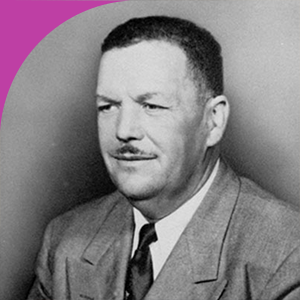
Vernon Dahmer, Sr.
Content Warning: Violence
A Mississippi man who fought Jim Crow-era laws to ensure that Black citizens could vote, Vernon Dahmer, Sr. died defending his family from a white supremacist attack.
"You get them out while I try to hold them off!" Vernon Dahmer shouted as he passed 10-year-old Bettie, already badly burned from the flames engulfing their home, out a back window to his wife.
The date was January 10, 1966. The place: Hattiesburg, Forrest County, Mississippi. As the Dahmer home and store went up in flames, Vernon Dahmer’s courage and quick thinking saved his family. Grabbing one of several loaded shotguns he always kept nearby, he returned fire on his attackers, trying to give the rest of his family time to get out. As his son Dennis later said, “There were about eight of them shooting at my dad. He's shooting back at them. Running through the house while they’re burning the house, shooting the windows out, throwing gallons of gas in, throwing torches in. My dad running through the flames, shooting out the doors, shooting out the different windows. It looked like it was more than one person that was actually shooting at them. I think that that unnerved them. They got nervous. One of them drops his gun. Then they start shooting one another. The Klansmen.”
The family escaped, but Vernon’s lungs had been fatally burnt. He died from his injuries the next day.
Vernon Dahmer lived in a county named after Nathan Bedford Forrest, a Confederate general and the first Grand Wizard of the Ku Klux Klan (KKK). Among many other injustices, Black men and women in Forrest County were routinely denied their right to vote. Literacy tests were just one of the capricious and humiliating barriers to voting. As Vernon’s wife Ellie, a schoolteacher with a Master’s degree later explained, “We had to go down and take that ridiculous long test . . . I went down and took that test at least three times. . . .It would be a long series of questions and then they would give you a little statement on a card and you would have to interpret what the statement meant on the card. An ordinary sixth grade child would have interpreted it correctly, but yet they'd say, ‘You failed it.’"
In 1960, out of Forrest County’s more than 7,000 voting-age Black residents, only about 100 had gotten past the many barriers to register to vote. Vernon Dahmer refused to accept this.
A father of eight who farmed land that had been in his family for generations, Vernon was a respected leader in his community. He taught Sunday school and owned both a small grocery store and a sawmill. Vernon diligently fought against Mississippi’s history of prejudice against Black voters, never ceasing in his struggle to realize the promise of the 15th Amendment—which guaranteed men could not be denied the right to vote based on “race, color or previous condition of servitude”.
In 1962, when the U.S. Department of Justice filed suit against Forrest County Clerk Theron Lynd for routinely denying Blacks the right to vote, Vernon volunteered to give a sworn statement attesting to the discrimination he had suffered at the hands of Lynd and his office. “He knew that he might get killed,” Ellie said later, “and he was willing to take the risk.”
This fear was only compounded when Medgar Evers, the civil rights leader and a personal friend of Vernon’s, was assassinated in 1963. Vernon began posting armed guards around his property—sometimes his sons, sometimes other people he hired. He stopped doing anything after dark, never traveled alone, and was himself always armed.
But Vernon pressed on. During the 1964 “Freedom Summer,” Vernon was president of the local NAACP chapter. He invited members of the Student Non-Violent Coordinating Committee (SNCC) to come out to Forrest County to organize a voting registration campaign. Vernon not only hosted the volunteers in his home, but he also gave them transportation and money, either by direct donations or by paying them in return for farm work.
The Dahmer family faced threats for years in response to Vernon’s activism, including regular harassment by the KKK. The family received menacing phone calls at all hours of the day and night. Cars buzzed through their yard and up their driveway, shooting out the windows in their store and the mailbox off its post. To further protect their home and family, Vernon and Ellie took to sleeping in shifts.
Dennis, who was just 12 years old when his father was killed, remembers a time his father called the local sheriff after the windows of his store were shot: “The sheriff comes out. He looks at the window. He looks at the damage and stuff and he's talking to my dad about it. I remember him looking at my dad and saying something to the effect of, ‘Well, Vernon, if you wasn’t involved in all this civil rights stuff, you wouldn't have these problems.’ He got in his car and drove off. I'm sure that sheriff had a good idea who had done it.”
Later Dennis reflected on the dissonance and injustice of his family’s situation. Ellie and Vernon, Dennis observed, “had five sons serving on active duty . . . We were out there protecting the security of the country. . . And my Dad and my Mom had to sleep in shifts to keep the family from being annihilated by the very people we were protecting in uniform.”
But by mid-1965, the Dahmers began to breathe easier. President Lyndon Johnson had signed the Voting Rights Act, and the battle seemed won. But even though literacy tests were outlawed, the poll taxes endured, and Black citizens in Hattiesburg remained uneasy about registering to vote. Intimidation was still the order of the day. KKK members routinely hung around the courthouse, staring down Black citizens. So Vernon, or one of his sons, would accompany groups of Black residents to the courthouse to pay their poll taxes and register to vote, protecting and supporting them every step of the way.
Eventually, Vernon worked out an agreement with the local sheriff to collect poll taxes and have a voter registration book placed in his grocery store. On January 9, 1966 Vernon announced this on the local radio station and then went a step further, offering to pay the $2 poll tax for those who couldn’t afford it.
That night, the KKK came for him and his family. Two carloads of Klansmen roared up from nearby Jones County, led by noted white supremacist Sam Bowers.
More than a dozen people were known to have been part of the attack on the Dahmer family, but most went free, or received short sentences. Ringleader Sam Bowers was tried three times in the 1960s for Vernon’s murder, but each trial ended in a hung jury.
The Dahmer family never gave up in their quest for justice and peace, quietly carrying on Vernon’s mission.
In the immediate aftermath of the tragedy, Ellie Dahmer helped the community heal. She accepted the offer from the local white Chamber of Commerce to rebuild the family house, and many white businessmen committed to supplying materials and labor. By bringing the Black and white communities together, she helped reduce the tension and create greater peace.
In 1992, Ellie Dahmer was elected Election Commissioner of Forrest County, serving in this position for more than a decade—the very same district where her husband was murdered for his voting rights advocacy.
A few years later, the Dahmer family approached investigative journalist Jerry Mitchell to help them persuade state officials to reopen the Dahmer murder case. In 1998, Sam Bowers was finally convicted and sentenced to life imprisonment for the murder of Vernon Dahmer, Sr.
This time, the jury only had to deliberate for 3 ½ hours to find Bowers guilty.
Dennis Dahmer channeled his father’s passion as he spoke to the press after the verdict: “Our father gave his life for a system that he believed in, even though that system wasn’t fair to him in his lifetime. We hope today’s verdict reflects the fact that we’re living in a new South and, more particularly, a new Mississippi.”
Time and time again, Vernon Dahmer, Sr. stood up to hate until he finally made the greatest sacrifice. Etched on his tombstone are some of the last words he ever spoke, as he lay dying in his wife Ellie’s arms:
“If you don’t vote, you don’t count.”
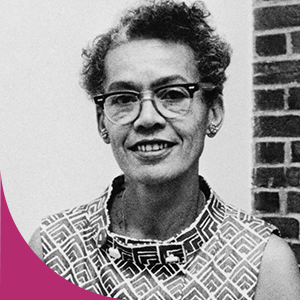
Pauli Murray
Pauli Murray, repeatedly denied opportunity because of her race and sex, refused to surrender to discrimination. Her vision and dedication helped topple the doctrine of separate but equal, carved a path for women's rights, and forged a more just America.
“You say I can’t and I’ll show you I can, even if I die trying. This was my attitude toward America.”
Lawyer, activist, poet, and priest Pauli Murray relentlessly did what others told her she could not. Her life was punctuated with firsts that laid the groundwork for the Civil Rights movement. Pauli's legal analysis and activism set the stage for women to gain equal protection under the law. But her most enduring impact, which would ultimately change the course of U.S. history, may be her steadfast conviction that segregation could be overturned by the Supreme Court using a legal argument rooted in the Fourteenth Amendment.
Growing up as a Black girl in Durham, North Carolina, in the 1910s and 1920s, Pauli experienced racism everywhere, from her grandparents’ stories of the Ku Klux Klan to the “colored” signs over water fountains and bathrooms. Most tragically, Pauli’s father was murdered at the hands of a racist white guard at a grim state-run psychiatric institution. This racially motivated killing stuck with Pauli throughout her life and shaped her lifelong activism against injustice.
By the time she graduated from high school at the top of her class, Pauli was determined to go to college far from the segregated South. “No more segregation for me,” she said later. “I was fifteen, but that I knew.” She graduated from New York’s Hunter College in 1933, one of four Black students in a class of more than two hundred.
Continuing her education became a point of passion for Pauli, but at each brush with academia, she was launched further into activism. In 1938, her application to the graduate school at the University of North Carolina was rejected: “members of your race are not admitted to the University,” the dean’s letter read.
Pauli knew UNC would likely deny her an opportunity to advance her education, but seeing the rejection in print infuriated her. She wrote to the University president and the NAACP, and the story was leaked to the press. UNC’s student newspaper, the Daily Tar Heel, detailed the campus reactions. “I’ve never committed a murder yet,” one student told the paper, “but if a black boy tried to come into my home saying he was a ‘University student…’” Others “vowed that they would tar and feather any ‘n—er’ that tried to come into class” with them.
Pauli penned a scathing response to one of the Daily Tar Heel’s editorials, but her pursuit of justice was cut short when she met with NAACP lawyer (and future Supreme Court Justice) Thurgood Marshall. He explained that Pauli’s case just wasn’t strong enough to mount a legal battle. She was crushed—but she also felt a burden lift.
“Much of my life in the South had been overshadowed by a lurking fear,” she wrote later. “Terrified of the consequences of overt protest against racial segregation,” she had endured its indignities, each one “accompanied by a nagging shame which no amount of personal achievement in other areas could overcome. For me, the real victory of that encounter with the Jim Crow system of the South was the liberation of my mind from years of enslavement.”
Galvanized by UNC’s rejection, Pauli protested segregation on a Virginia bus, campaigned for workers’ rights, and decried the evils of racism in a series of letters to the press and First Lady Eleanor Roosevelt, with whom Pauli struck up a long friendship and political dialogue.
Though her activist aims drove her, Pauli aspired to be a poet and writer. When she was recruited for law school, Pauli questioned which path to take. Her direction became clear in the summer of 1941 when she stepped into a New York apartment building on her way to a colleague’s funeral, and a doorman insisted she use the service entrance. Racism would follow Black people everywhere, Pauli realized, even to New York City.
Her calling became clear: the only way to escape segregation was to end it. Pauli “went on to Washington to enter law school, with the single-minded intention of destroying Jim Crow.”
Pauli arrived at Howard Law School in 1941 to find that sexism—what she later termed “Jane Crow”—was as persistent an obstacle as racism. Pauli was often mocked, discounted, and excluded by all-male professors and students. But their ridicule only propelled Pauli as she made her way to the top of her class.
In one civil rights seminar, Pauli and her classmates sparred with experienced lawyers on civil rights cases. The class workshopped arguments against Plessy v. Ferguson, the landmark 1896 Supreme Court decision that paved the way for racial segregation. It was during this workshop that Pauli began building the argument that would change the course of U.S. history.
Activists and legal scholars had tried for years to overturn the 1896 Plessy decision, which provided the legal basis for segregation ordinances and unequal access to public facilities, stores, restaurants, transportation, and schools all across the South. When Pauli was in law school, the going theory was that Plessy could only be defeated using case-by-case proofs that “separate” Black facilities were in no way “equal” to their white counterparts.
Pauli proposed a different idea: Plessy should be overturned outright for violating the Fourteenth Amendment’s Equal Protection Clause. She wrote a legal analysis that was “a frontal attack” on Plessy, arguing that segregation violated “the right not to be set aside or marked with a badge of inferiority.” Segregated facilities relegated Black Americans to a lesser legal and social position. “Having no legal precedents to rely on, I cited references to psychological and sociological data supporting my assertion.”
Her classmates were shocked. It just couldn’t be done, they scoffed. But their derision only impassioned Pauli: “Opposition to an idea I care deeply about always aroused my latent mule-headedness,” Pauli wrote later. Her classmates laughed as she made a ten-dollar wager with her professor. Within twenty-five years, Pauli bet, Plessy would be overturned.
After graduating from law school, Pauli was hired by the Methodist Church to create a pamphlet describing each states’ segregation laws. Instead, they got a seven-hundred page detailed and comprehensive book, States’ Laws on Race and Color. According to Thurgood Marshall, Pauli’s book served as the “bible” during Brown v. Board of Education of Topeka, a direct challenge to Plessy v. Ferguson before the Supreme Court. Pauli’s former law professor, Spottswood Robinson, used her senior paper about Plessy as a guide to craft the argument that would ultimately bring down Jim Crow. The argument was exactly as Pauli had so boldly asserted as a law student years prior: whether racially segregated public schools were unequal and, therefore, violated the Fourteenth Amendment, which guarantees citizens equal protection under the law.
On May 17, 1954, Chief Justice Warren delivered the opinion of the court. His words echoed Pauli’s law school argument from a decade before: “Segregation of white and colored children in public schools has a detrimental effect upon the colored children,” he wrote. Modern psychological knowledge made that clear. The court declared segregated educational facilities inherently unequal, a deprivation of the Fourteenth Amendment’s guarantee of equal protection. Plessy was overturned, decimating the judicial justification for a “separate but equal” society and opening the door for lawyers and civil rights groups to continue challenging segregation in all its forms.
Pauli did not just help deal this fatal blow to Jim Crow but took on Jane Crow as well. Her legal analysis contributed to victories in pivotal women’s rights cases over the next few decades, including White v. Crook that barred the exclusion of women from juries. Pauli’s activism with the American Civil Liberities Union and National Organization of Women also ensured that discrimination on the basis of sex was included in the Civil Rights Act of 1964. Over fifty years later, Pauli’s efforts continued to advance Civil Rights as “on the basis of sex” would be used in 2020 in the Supreme Court decision of Bostock v. Clayton County, protecting LGBTQ+ Americans from employment discrimination.
Pauli’s own identity likely influenced her defiance of rigid gender categories. Such categories did not fit Pauli. Her romantic relationships were with women, and she identified for many years as a man, despite never finding the understanding or support to live that identity more fully.
“Pauli Murray calls us to confront the way we even categorize and think about things,” says Barbara Lau, director of Durham’s Pauli Murray Center for History and Social Justice., Pauli’s life and work challenges the concept of courage itself. Courage is not a single act alone—”it’s a practice,” says Lau.
In 1977, Pauli embarked yet another career, becoming the first Black woman ordained by the Episcopal Church. “All the strands of my life had come together,” she wrote. “Descendant of slave and of slave owner, I had already been called poet, lawyer, teacher, and friend. Now I was empowered to minister the sacrament of One in whom there is no north or south, no black or white, no male or female—only the spirit of love and reconciliation drawing us all toward the goal of human wholeness.”